More Than a Chatbot: Agentic AI Applications for Your Content
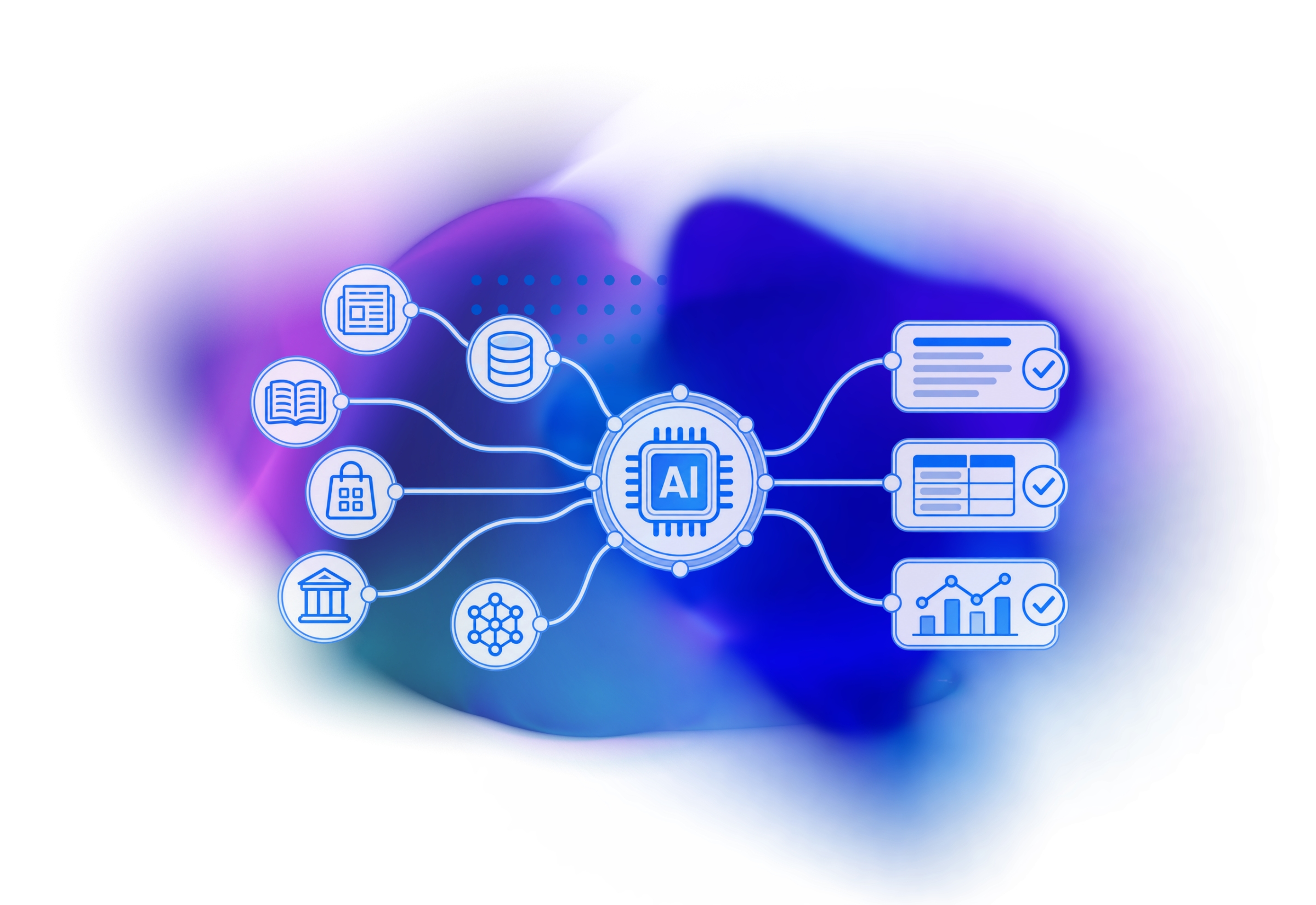
With Retresco, you can develop AI chatbots, information assistants and agentic workflows that do more than generate answers. They understand information needs, select relevant sources and tools, and present results in context.
Seamlessly Connected Internal and External Data Sources
Retresco's agentic AI combines your own content with up-to-date external data sources. It analyses search intent, autonomously orchestrates data, search methods and interfaces, and delivers precise, real-time streaming responses – complete with source references, filters, timeframes, tables and structured data.
Reliable and Interactive Information Services
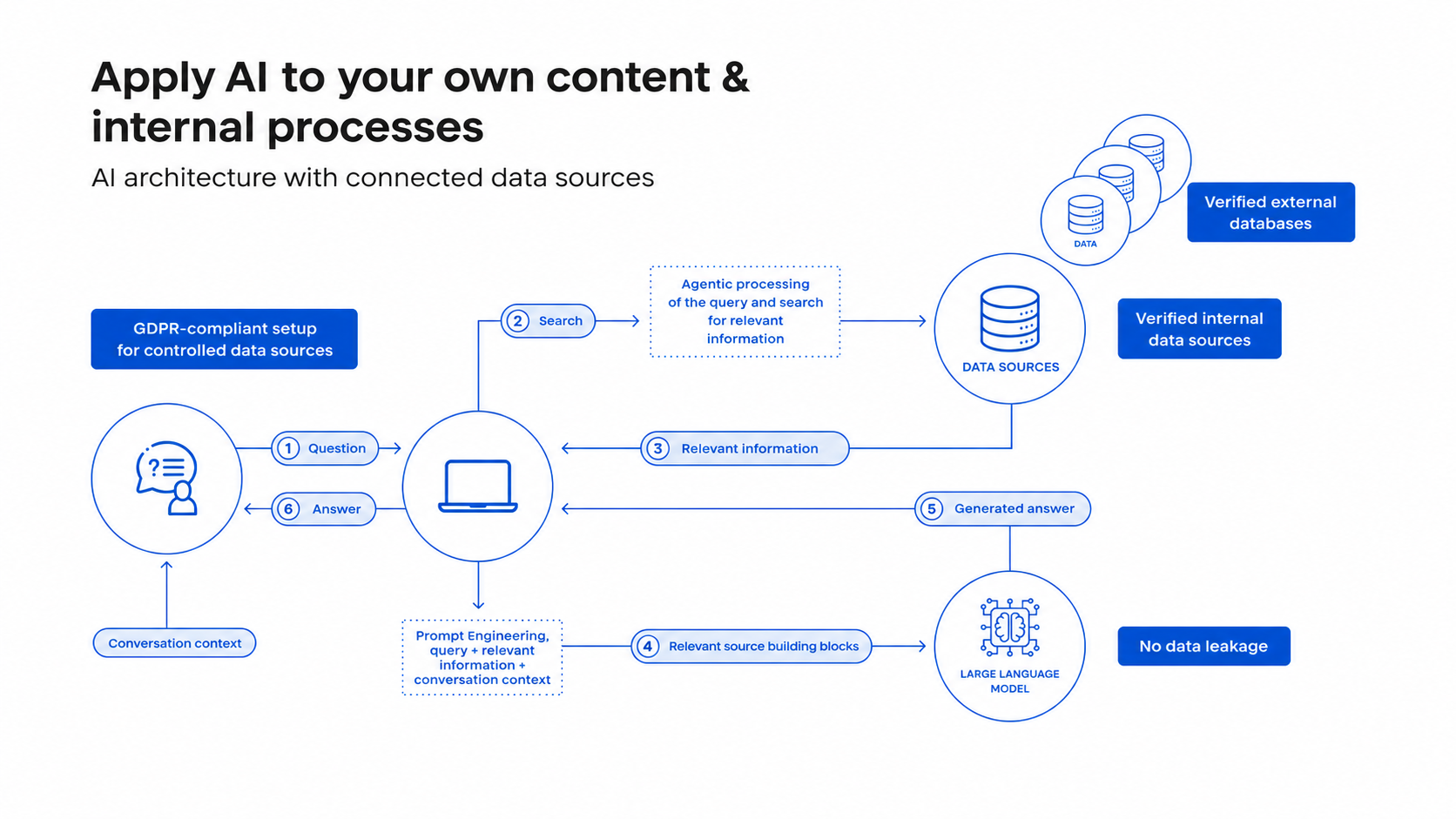
Conventional chatbots typically search a limited dataset and pass individual retrieved passages to a language model. Retresco goes further. Its agentic AI understands what users actually want to know or achieve. It dynamically determines:
- Which internal and external data sources are relevant
- Which search, vector-based or retrieval methods should be used
- Which filters, timeframes and access permissions need to be considered
- How information should be prioritised, compared and combined
- Which format is most appropriate for presenting the results
This creates reliable information services capable of handling even complex, multi-step queries effectively.
Why Choose Retresco for Agentic AI?
How Agentic AI Works with Retresco
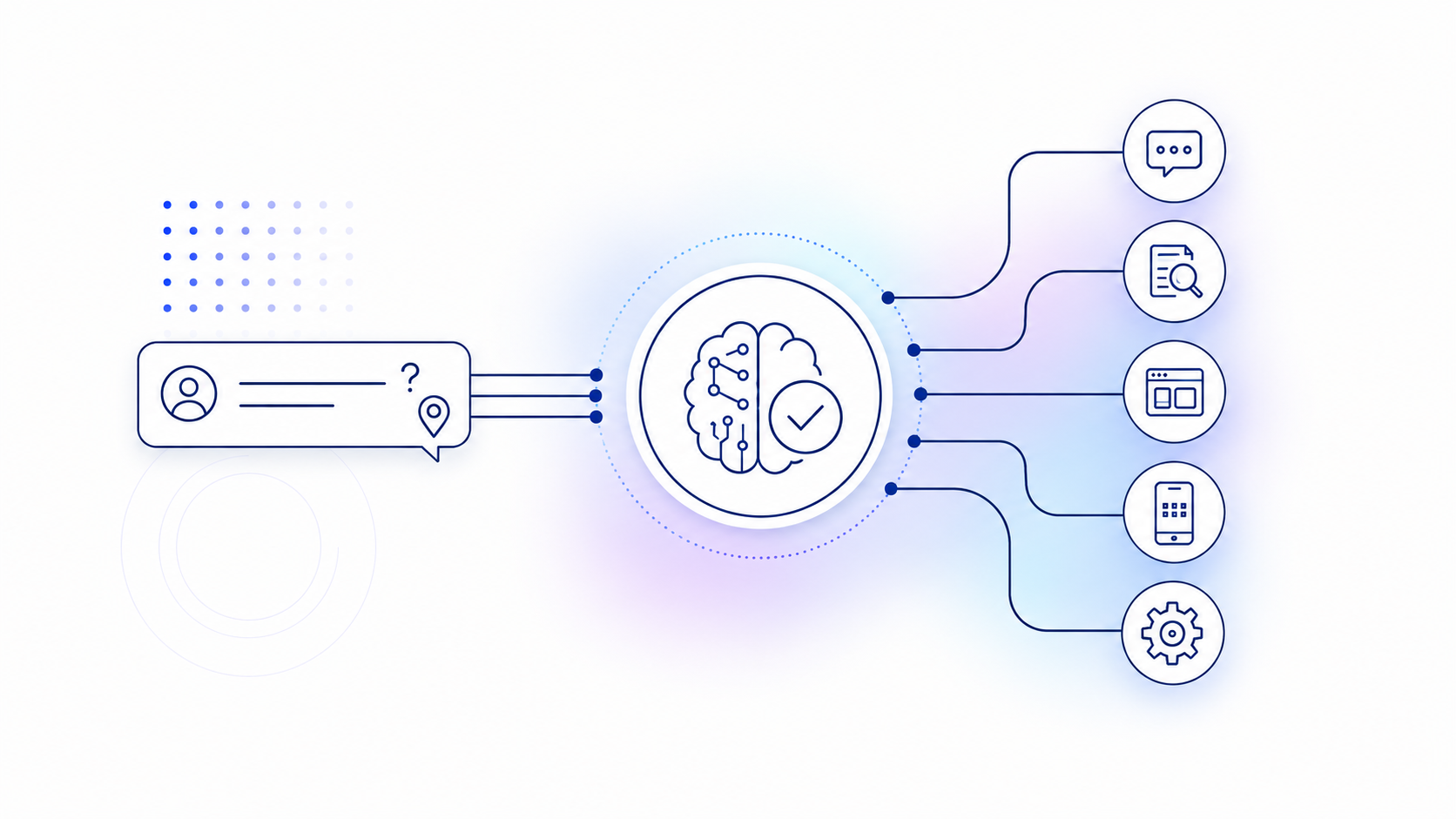
1. Understanding the User's Query
The AI agent analyses the user's specific information needs, search intent and existing conversational context.
Example: "What is the current traffic situation in Central London – particularly on Oxford Street?"
2. Selecting Data Sources and Methods
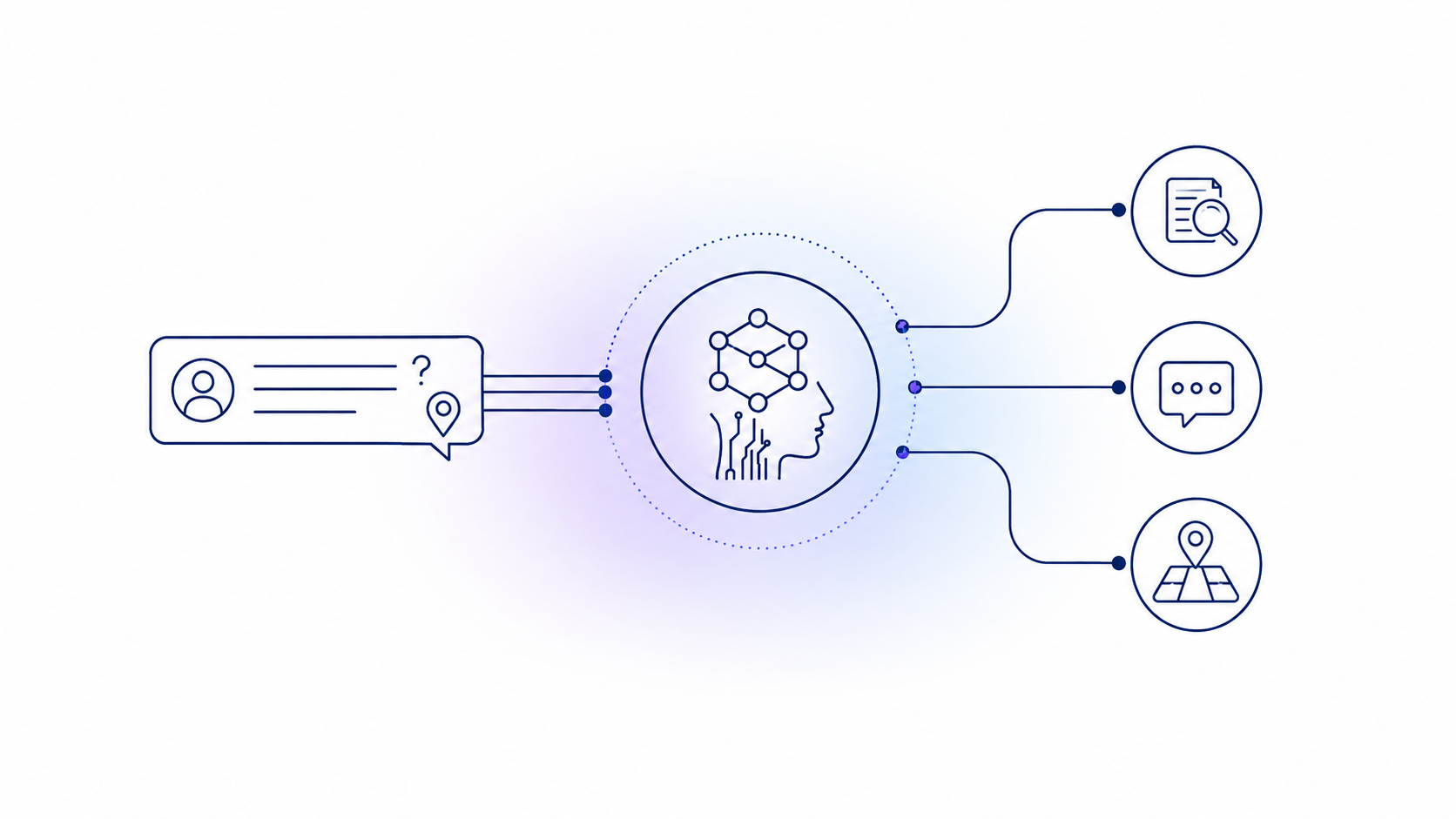
Retresco dynamically determines which sources, filters and search methods are needed to process the query.
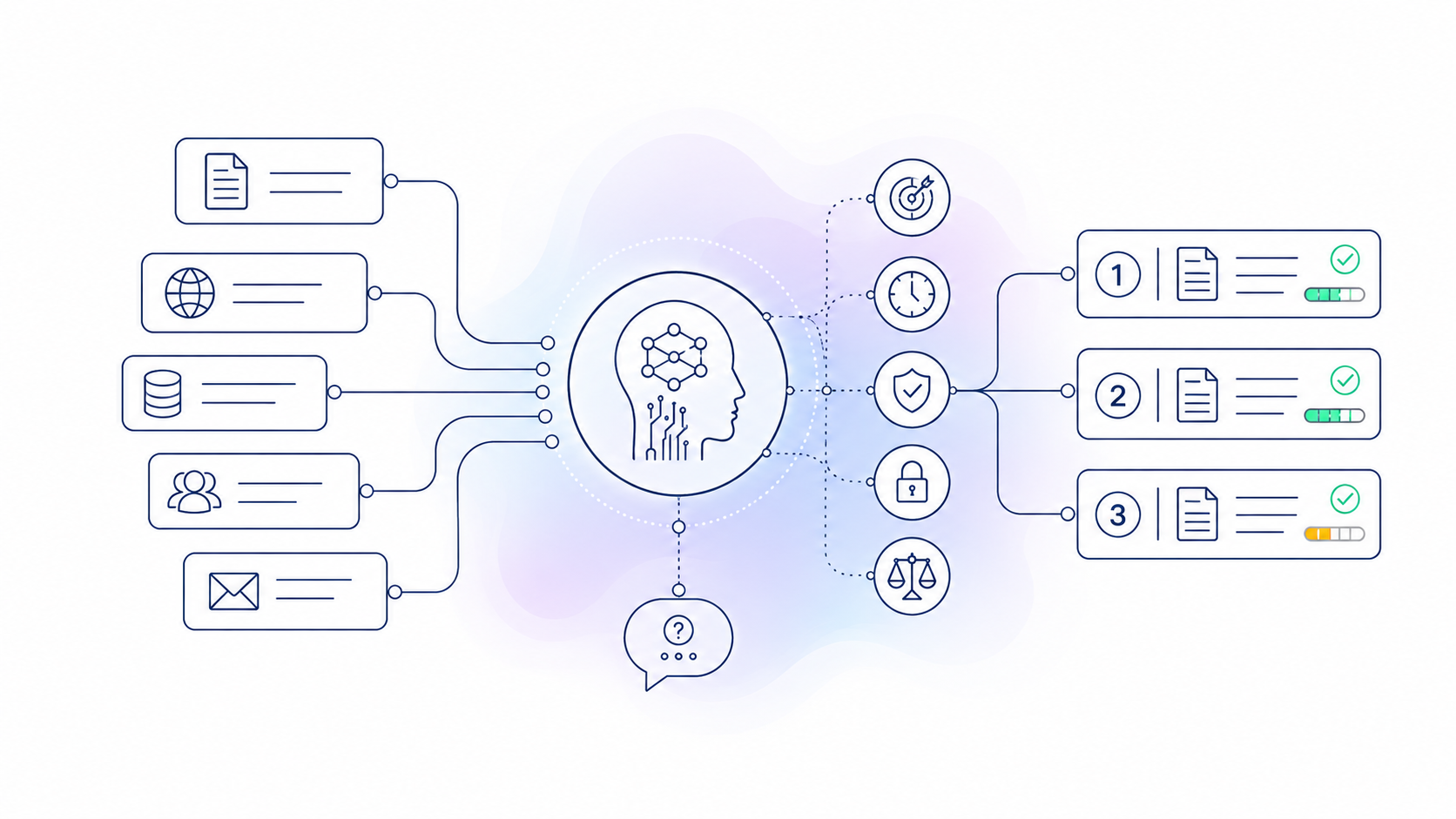
Depending on the use case, the AI system can search articles and archives, databases and knowledge repositories, documents and PDF files, transcripts and original recordings, product and service data, or external APIs and live data.
Conventional search, semantic retrieval, vector search, filtering logic and specialised tools can be combined.
3. Evaluating and Prioritising Information
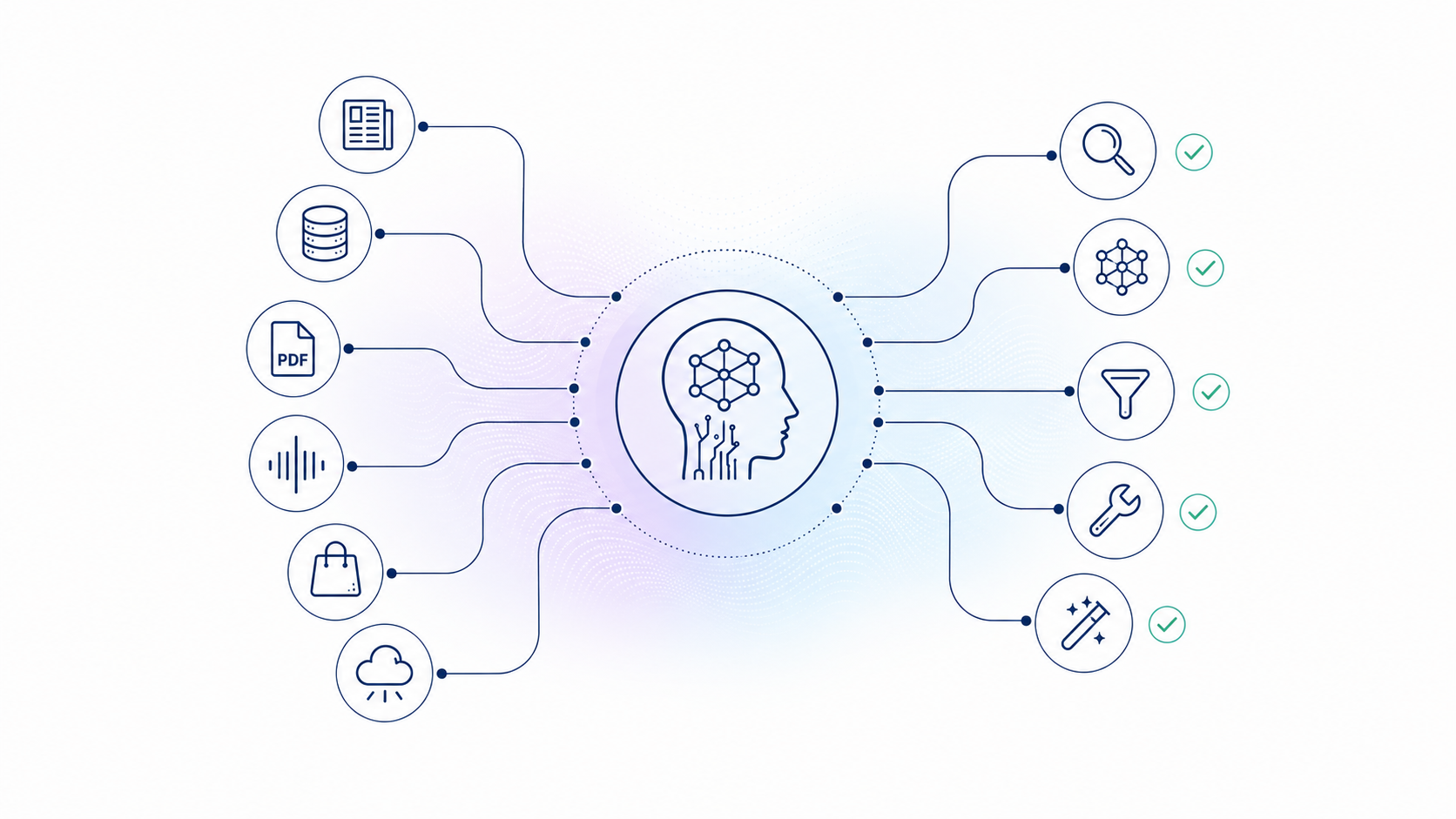
Retrieved content is assessed according to relevance, recency, origin, access permissions and other criteria. Different sources can be weighted or prioritised as required.
If a query is ambiguous, the AI can ask clarifying questions before generating an answer.
4. Delivering Structured Answers
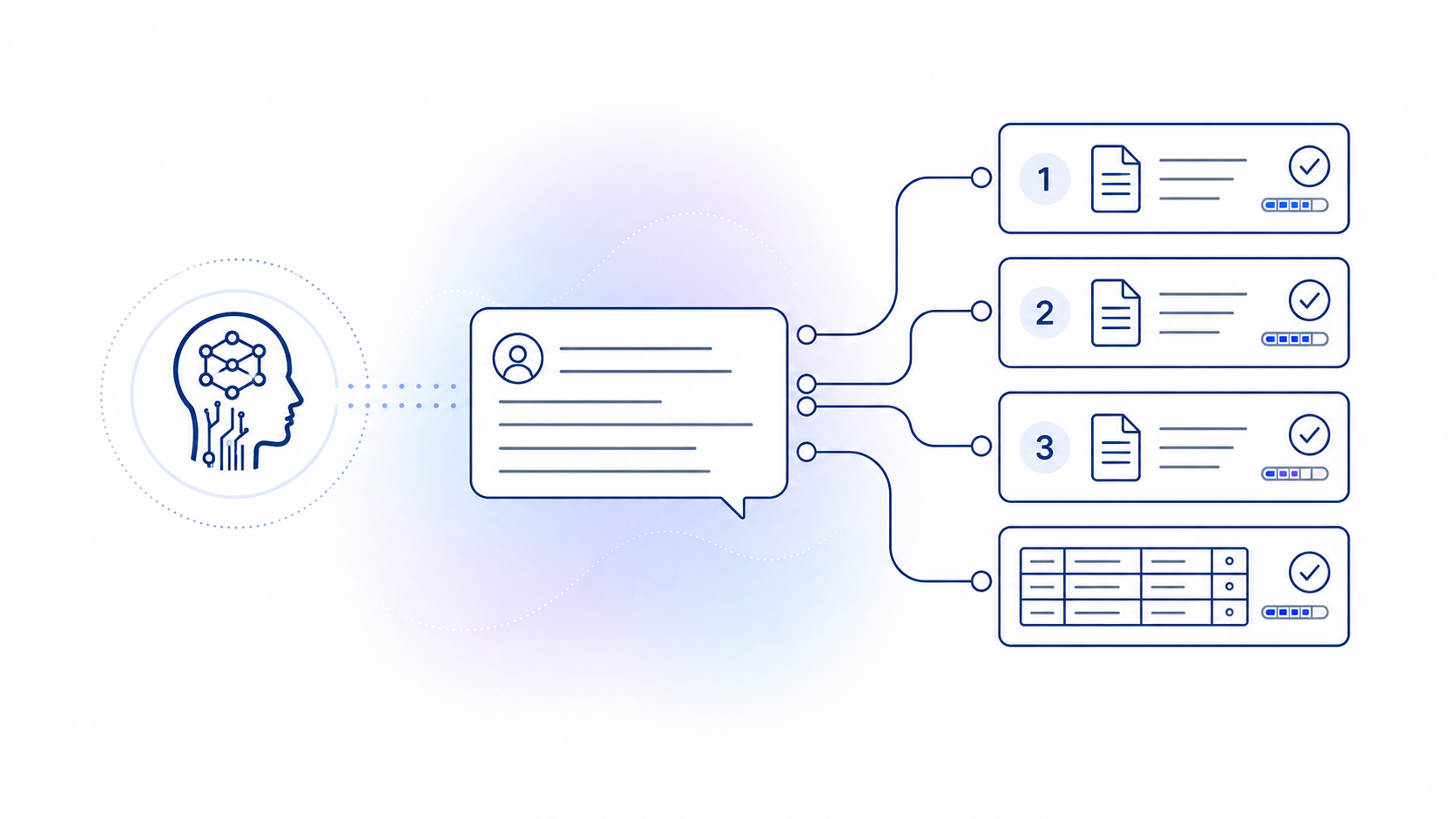
Retresco provides relevant information through transparent, traceable streaming responses – including sources, metadata, timestamps and structured data objects.
5. Integrating Results Directly into Services and Workflows
Answers can be used and further processed directly within a chatbot, research assistant, website, app, customer portal or automated workflow.
Intelligently Connect Your Own Content with Live Data
Reliable Answers from Controlled Sources
The quality of an AI-generated answer depends on the quality of the underlying information. Retresco therefore processes approved, traceable and professionally curated sources.
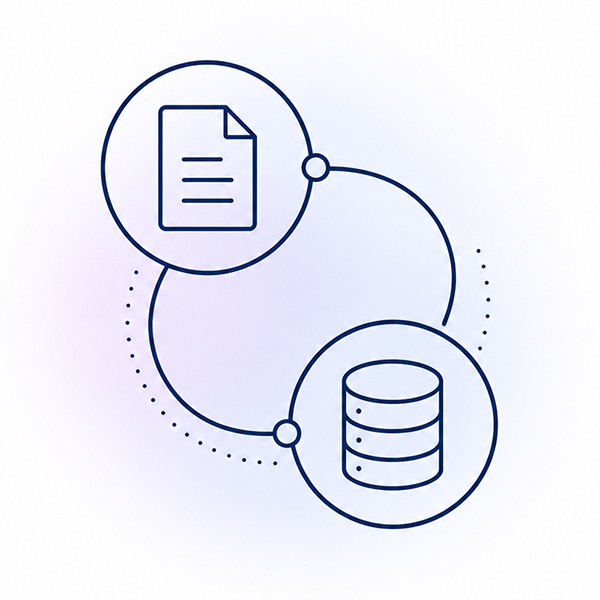
Your own content, external data and live interfaces are brought together within a controlled information architecture. Source citations, timestamps and metadata provide transparency about the information on which each answer is based.
Get Started Quickly – Expand Flexibly
Turn Content into Intelligent Services
Connect your content with up-to-date data sources and establish a controlled information base for AI chatbots, information assistants and agentic workflows.



What You Can Achieve with Retresco
You Provide the Knowledge. Retresco Provides the Agentic AI.
We prepare your information resources for AI and ensure reliable operation: from data integration, transformation and parsing through structuring, indexing and retrieval to intent and context analysis. Sources and tools are orchestrated by AI agents, content is regularly updated and answers are streamed in real time. Interfaces and endpoints enable flexible integration into existing systems.
This allows you to deploy powerful agentic AI without having to develop and operate your own search, data and agent infrastructure from scratch. Suitable applications include news services, specialist information portals, topic dossiers, service portals and public information services.
Frequently Asked Questions
What Is agentic AI?
Agentic AI understands the intent behind a query and can perform tasks autonomously or semi-autonomously. It selects suitable data sources, tools and methods, executes multi-step processes and delivers context-aware results.
Unlike basic chatbots, it does more than respond to individual questions. It dynamically plans the steps required to complete a task.
What does Retresco offer in the field of agentic AI?
Retresco provides ready-to-use agentic AI applications for publishing, editorial, commerce and information platforms.
The system understands search intent, considers conversational context, orchestrates internal and external data sources and delivers precise, real-time streaming responses. Results can include source references, filters, timeframes, tables and structured data.
Who is retresco's agentic AI designed for?
The solution is particularly suitable for media companies, specialist publishers, digital commerce businesses and public sector organisations.
Retresco is designed for environments where extensive or distributed information repositories need to be made accessible through interactive services, and where up-to-date information, source quality, scalability and control are essential.
How does Retresco differ from conventional RAG solutions?
Conventional RAG systems often simply retrieve relevant text passages and pass them to a language model.
Retresco also analyses search intent and conversational context. Its agentic AI dynamically determines which datasets, search methods, filters and tools are required for a particular query. It can combine multiple sources, ask follow-up questions and present results in structured formats.
This transforms static retrieval into a flexible, agentic information process.
How does information retrieval work?
Each data source is connected, processed and made accessible through suitable search and retrieval methods.
For every query, agentic AI determines which sources, filters and methods are relevant. Conventional search, semantic retrieval, vector search, metadata filters and external tools can all be combined.
The most relevant information is then prioritised and brought together into a coherent, traceable answer.
Can internal and external data sources be used together?
Yes. Retresco combines your own content, such as article archives, databases, documents and product catalogues, with external information sources.
These may include weather, traffic, financial market, sport, event, election or product catalogue data. The AI system determines which sources to use based on intent, context, recency and access permissions.
Why are external data sources valuable for agentic AI?
Your own content is particularly valuable and reliable, but it often covers only a limited range of information.
External data sources complement it with up-to-date, domain-specific and professionally maintained information. Source citations, timestamps and metadata ensure that results remain transparent and traceable.
How up to date is the information provided?
New and updated content can be processed in real time or near real time, depending on the data source.
Timestamps and metadata indicate how current the information underlying an answer is. This enables agentic AI to reliably incorporate the latest developments.
How does technical integration work?
Retresco can be integrated into existing systems via API or the Model Context Protocol (MCP).
CMS platforms, archives, databases, document repositories and external interfaces are connected to the Retresco infrastructure. Agentic capabilities such as intent recognition, data orchestration, retrieval, streaming responses and structured output are available directly as a service.
Is a dedicated AI frontend required?
No. Retresco can be integrated as the underlying AI engine within an existing frontend or deployed using a ready-to-use, responsive frontend widget.
This allows interactive information services to be embedded in websites, apps, online shops, editorial systems, intranets or customer portals.
Which language models can be used?
Retresco is fundamentally model-agnostic. Retrieved information and structured results can be provided as context to different large language models, including those from OpenAI, Anthropic and comparable providers. Data preparation is optimised for low latency and efficient token usage.
How are results delivered?
Answers are delivered as real-time streaming responses and formatted according to the specific use case.
Supported formats include continuous text, lists, tables, comparisons, source citations, timeframes, filters and structured datasets. Downstream systems can display the results directly or process them automatically.
How scalable is Retresco's agentic AI?
The cloud-native infrastructure is designed to handle high query volumes and extensive information repositories containing large numbers of documents.
Data sources, indexes and search processes can be scaled independently. Retresco manages infrastructure setup, operation, monitoring and continuous development.
How is data protected and kept separate?
Internal datasets are processed through dedicated content pipelines, indexes and endpoints.
Access rights, permissions and available information sources can be configured individually. Different customers’ datasets remain technically and logically separated.
What conversational insights does Retresco provide?
Retresco makes usage and interaction data available through integrated dashboards or via API push.
Metrics can include frequently discussed topics, questions asked and left unanswered, interactions per session, response times, source clicks and content blind spots. These insights help organisations continuously optimise their information services.
How quickly can an agentic information service be implemented?
Core components such as intent recognition, retrieval, data orchestration, streaming responses and structured output are already available as a service.
This means organisations do not need to develop a complete agent, search and data infrastructure from scratch. Retresco can be adapted to existing content, platforms, workflows and use cases, starting with a clearly defined initial application.